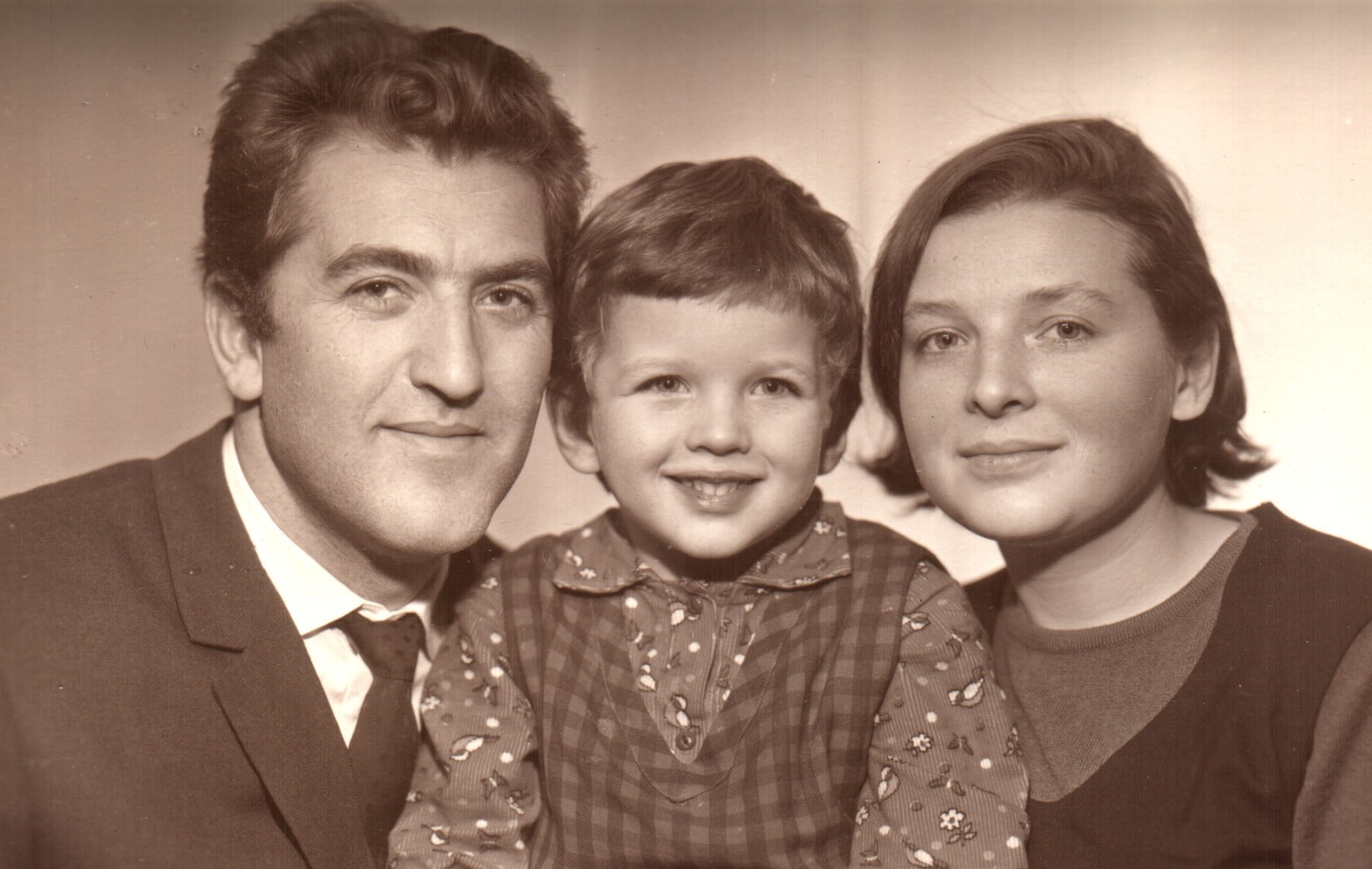
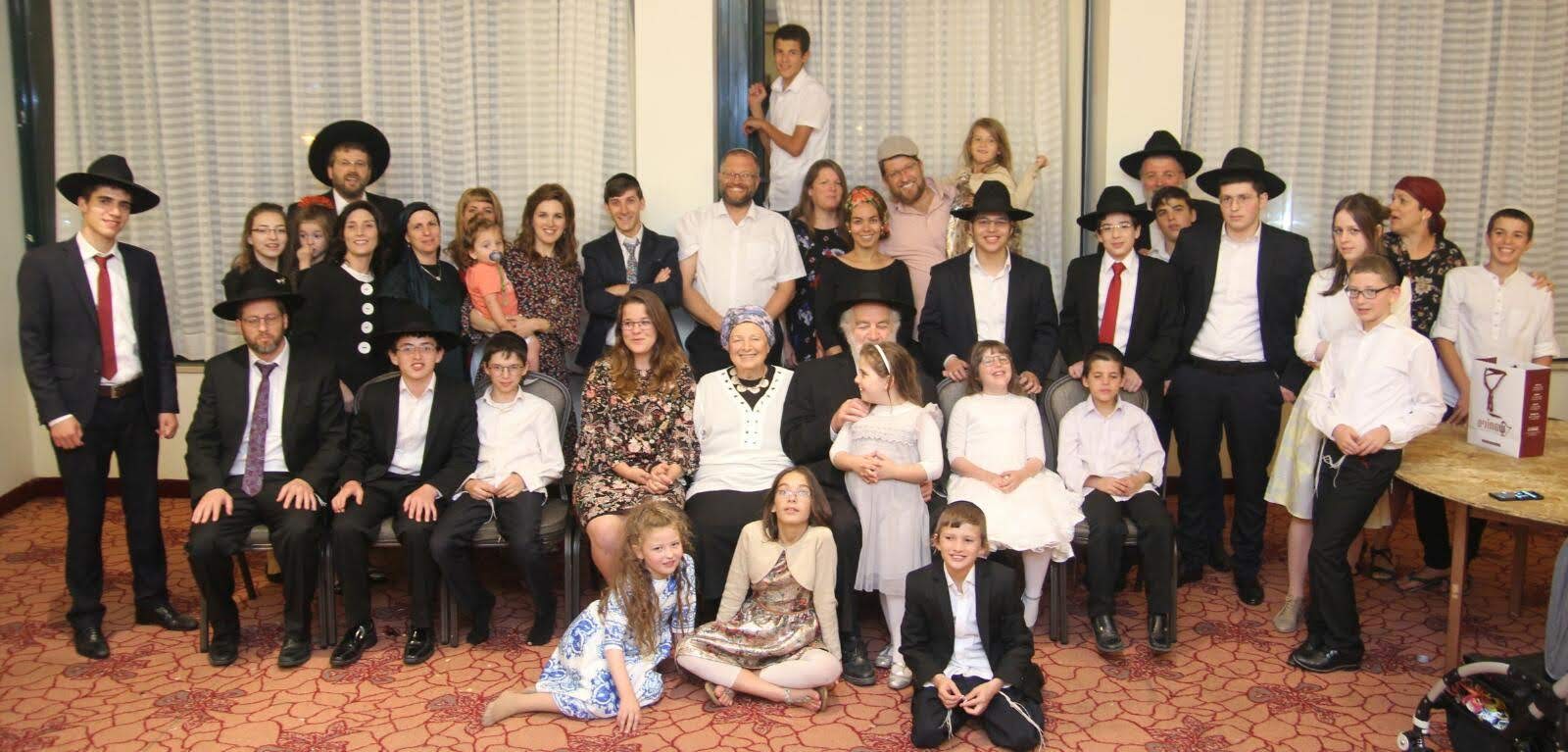
Credit: Venafutzoteinu Kanes \ Written by: Tzipi Golan, taken from the monthly Marveh Latzameh, Sukkot 5781 (Issue 2479)
For close to fifty years now, Mrs. Leah Mendelson, who manages her husband Dr. Yehuda Mendelson’s medical relaxation clinic (a treatment method that helps with medical conditions such as diabetes, high blood pressure, and anxiety, and strengthens the immune system—something especially important now, during the coronavirus pandemic), has been living in the Land of Israel. Yet every time she opens her eyes to a new morning, she finds herself looking heavenward and praying: “Master of the Universe, have mercy on us and help ensure that this ‘hard labor’ never ends...”
Leah came to the Land of Israel to perform hard labor, yet she made that decision willingly. On her way there, her life was threatened by the mental hospital into which her husband was committed, a drunken neighbor with a knife in his hand, Siberia, death, hunger, and other dangers. She faced them courageously. Now, five decades later, she returns to those difficult days under the Soviet boot.
Stalin Is Haman
“I spent my entire childhood in Soviet Russia. I was born after World War II, during the period when Stalin ruled Russia with an iron fist. I remember how, in 5713, the Russians falsely accused Jewish doctors of trying to poison their patients. That accusation was enough for Stalin to decide on an immediate purge. He compiled a list of all the Jews throughout the Soviet Union, sorted them by city, and planned their deaths. He would round them up, put them on trains, and send them to Siberia. Some of the Jews would die on the journey, the tyrant—may his name be erased—planned, and those who did not would freeze to death in the Siberian cold.”
It is important to understand that the Soviet Union was not a country like any other, where the prime minister makes a decision, the people object, and the decision is changed. If Stalin decided to kill all the Jews, there was nothing that could stop him.
Except God, blessed be He.
On Purim of that year, God took the tyrant’s life before he could carry out his evil plan, and the decree was annulled.
“I read in Rabbi Yitzchak Zilber’s book, ‘To Remain a Jew,’ that on Purim of that year, he himself was already in a camp in Siberia. That night, he sat and read the Scroll of Esther for himself and several other Jews. One of the Jews there sighed and said, ‘Haman could be overcome, but Stalin... No one will ever overcome Stalin.’ Rabbi Yitzchak heard him and said, ‘Stalin is only flesh and blood. The Creator can do anything He wishes with him. You do not know what the Holy One, blessed be He, will do with him, or what will become of him in half an hour.’ It later emerged that at the very time he spoke those words to that Jew with simple, wholehearted faith, Stalin died.”
“When Stalin died, I was six years old. I remember seeing everyone around me crying. To the Soviets, Stalin was the sun of the nations. He was their hope, the one they looked up to. True, he was a cruel tyrant who murdered millions, but in their non-Jewish minds, he was both a tyrant and a man of hope. I remember how, as a six-year-old girl who had never, heaven forbid, heard a bad word about Stalin, I looked around and thought to myself: ‘Why are they crying so much? They ought to be happy!’ I could not explain why they should be happy, but even in my little girl’s mind, it was clear to me that things could not get any worse...”
As far as the ability to practice Judaism was concerned, there was no difference between Stalin’s era and that of his successor, Khrushchev. In those days, living a Jewish life in Russia was utterly impossible. People knew that if they did anything religious, they would be sent to prison, and if they said a word, they would be exiled to the camps. The KGB was everywhere. It knew everything about everyone and was particularly expert at making people’s lives miserable.
The irony is that even those who did not observe the commandments and lived as the Soviets demanded were discriminated against because they were Jewish. “At university, for example, there was a five-percent quota for Jews. You could be infinitely talented, a genius with an IQ that put all of Russia in your back pocket—if the quota was filled, there was no place for you.”
And remember, we are talking about Soviet Russia, a place where a life without a degree was not worth a thing. “Surprisingly, it was precisely this discrimination, every step of the way, that kept us Jewish. It reminded us again and again that we were Jews, and if we were already such outcasts, we had to find out what being Jewish meant. The non-Jews’ ‘havdalah’—their separation of us—preserved our ‘kiddush,’ our sanctity.”
Hospitalized During the War
Leah grew up, came of age, and married Yehuda Mendelson, a young, ambitious Jewish doctor. “Right after we married, I told my husband, ‘We need to move to the Land of Israel.’ I did not know what the Land of Israel was or what it meant to be a Jew, but I knew that Russia was no place for Jews. I am not talking about a place to observe the commandments—Russia was no place for Jews at all. Yet even as I said it, I knew I was talking about something out of reach. We had no reason to be here, that was true, but getting to the Land of Israel was a distant, utterly impossible dream. Instead, we went looking for Jews who knew what being Jewish meant and might teach us a little about that privilege.”
“We did not manage to find out very much, because I was admitted to the hospital with a medical complication.” In those days, a hospital was a prison for people. You could not go inside, certainly not to visit the patients. “Even years later, when I came to the hospital with a small baby, I was required to leave him there, go away, and not return until he had fully recovered. That was the condition for his receiving treatment.” In such a situation, incidentally, no one could know whether a loved one was receiving the treatment they needed or whether someone there was settling old scores on behalf of the regime...
“In any event, I was in the hospital, and my husband, who was a doctor, worked at another hospital. Even though he was a doctor, he was forbidden to visit me. A short time after I was hospitalized, the Six-Day War broke out in the Land of Israel. Russian radio broadcast nonstop, telling everyone about the Arab and Egyptian armies conquering the Land of Israel and how, at any moment, they would reach the Tel Aviv they so hated. The reports were accompanied by military marches and jubilant voices. To the Soviets, the annihilation of the Jews was a blessing like no other.”
But the hate-filled reports had the opposite effect on Russia’s Jews. They stirred them to life. Suddenly, they remembered that they were Jews, and that the people about to be annihilated were their brothers. Suddenly, they realized that they might be left as the only Jews in the world, and if so, they had to learn a little about what Judaism was and what it asked of them. “At that time, I was blessed with my firstborn son. My husband was home alone, and all our communication took place in coded words through the hospital windows. He would shout from below, and I would write a note, tie it to something heavy, and throw my answer down to him. That was how I heard about the war, how I heard about the letter my husband had written asking to be sent to help the Jews of the Land of Israel, and how I heard that, at the last moment, he had burned it instead of sending it.”
Had the letter been sent, Dr. Yehuda Mendelson would undoubtedly have ended his life by a bullet or in Siberia. But just before he sent it, the reports changed, and suddenly the Soviets were dryly reporting the retreat of the Arab armies. “That report came at the very last moment for us. My husband burned the letter, and on the eighth day after the baby’s birth, I came home.”
The eighth day of a baby boy’s life is the day of his circumcision. “We decided to have the baby circumcised, come what may. My husband went off to find a mohel, and I hurried to find a place where we could hold the brit. At the time, we lived in workers’ housing: ten rooms along a long, narrow corridor, with a different family living in each room and everyone sharing one kitchen. In a place like that, it was obvious that we could not hold a brit without someone informing on us and all of us being exiled to Siberia. An aunt of mine was living in a private home at the time. She agreed to help us but was afraid of being caught. As a compromise, she went away for a few days, leaving us the keys and knowing absolutely nothing about what would take place in her home...”
At midday, three people slipped into the large apartment. Mrs. Mendelson and the baby were already there. Dr. Mendelson returned with a mohel, another Jew joined them, and so did a cousin of Mrs. Mendelson’s. Those were all the people present at the brit.
Quietly and quickly, the commandment was fulfilled. The brit was performed, and everyone fled the place in silence. “We knew nothing back then. We were told to bring the baby tied to a large pillow, and that is what we did. We carefully tied him to the pillow and brought him to the mohel. The mohel performed the circumcision and handed the child back, and we, his exhausted, frightened parents, did not dare ask what came next. In Russia, we had been taught not to ask questions. So we had no idea that we were allowed to take the baby off the pillow and care for him. We fed him on the pillow, and at night, when he cried, my husband walked around the house with him, the baby still on his circumcision pillow. Only in the morning, when the mohel came to check on him, was he finally released from his prison and given proper care.”
The little baby was given the name ‘David,’ after Dr. Mendelson’s father, the sole survivor of a large family that had all perished in the Minsk ghetto. “In Russian, we called him Davidchik.”
But the young parents’ main problem still lay ahead. “In the Soviet Union, visits to the well-baby clinic were compulsory. The day the baby turned one month old, I had to appear with him at the clinic for examinations, vaccinations, and everything else he needed. I could not ‘forget’ the visit. Forgetfulness in a place like that meant prison and immediate danger.”
And so, when the baby was a month old, Mrs. Mendelson found herself walking into the lion’s den. “Of course, the nurses immediately discovered that the baby was circumcised. They shouted at me, could not understand how I had dared perform a ‘religious ritual,’ and - - - reported the circumcision to their superiors.”
At that point, the Mendelson family’s life became hell. “The moment they reported that we were observing Jewish commandments, it was all over. You could say we truly had the privilege of ‘risking our lives’ for our David’s brit.”
When the KGB enters the picture, anything can happen. “All at once, they began causing trouble for my husband at work. They made his work at the hospital difficult, fired him every other day, and finding a job became a nightmare. At the same time, our David came down with pneumonia and developed an allergy to antibiotics. Over the next three years, he had pneumonia seven times. Each time, his life was in real danger, and he had to be hospitalized.”
But hospitalization for a circumcised Jewish child was no simple matter. “Once, I brought him to the hospital when he was blue and barely breathing. At the hospital, they looked at him and said, ‘He is fine. Go home.’ Crying, I took him to another hospital and begged them to admit him. David could barely breathe and needed oxygen and immediate treatment. The admitting doctor did not want to go near him, but finally, after much pleading, he agreed to admit him and sent me home. As I said, in those days parents were forbidden to stay beside their children in the hospital. I had no choice but to leave and pray to the Creator to protect my child and send him good people who would agree to treat him despite the terrible ‘sin’ he had ‘committed’ by being Jewish...”
Sickly little David’s condition did not allow Mrs. Mendelson to go out to work, but the repeated dismissals, stirred up by the long arm of the KGB, forced her to do something to keep them from starving. “I began sewing from home. I did alterations, sewed clothes, and did whatever I could to earn a living. Between the scraps of my husband’s jobs and my alterations, we somehow lived from hand to mouth. We knew we had to leave. We knew the situation would only get worse, but we did not know what we could do.”
Mommy, What Is a Zhidonok?
Three years passed. Mr. Mendelson moved from one job to another, and Mrs. Mendelson had no choice but to go out to work. “The job I was offered was selling train tickets. In Russia, you say thank you for anything, especially if you are Jewish, so I accepted it. As part of my employment benefits, David was admitted to a highly regarded daycare center in Leningrad. At the time, he was three years old and spoke fluently and clearly. A few days after I first brought him to the daycare center, as we were returning home, David asked me: ‘Mommy, what is a zhidonok?’ I stopped in my tracks, thunderstruck, because zhidonok is a slur meaning something like ‘dirty little Jew.’ ‘Who said that to you?’ I asked, and with heartbreaking innocence he told me: ‘Today the teacher stood me on the table and told all the children in the group to make a circle around the table, point at me, and sing “Zhidonok, zhidonok.” Mommy, what is a zhidonok, and why did she tell everyone to sing that to me? I didn’t like it!’ I swayed on the spot in shock. A little child, three years old—what had he done to you that you would abuse him like this? Needless to say, David never went back to that daycare center, and I did not return to work. That fact, and the liberty I had taken in resigning to protect my child from harm, may have infuriated the Soviets even more, because in the following months we suffered even more at their hands.”
“During those months, through wondrous Divine providence, a man boarded the train my husband was riding. My husband recognized him as a member of the Jewish underground and struck up a conversation with him—an unusual thing in the Soviet Union. One thing led to another, and they began talking about Judaism—something even more inconceivable. Who talked about Judaism with a stranger, and on a train, no less?! The man asked him simply, ‘Would you like to move to the Land of Israel?’ My husband nodded excitedly, and the two parted ways. As far as we were concerned, the episode was over. But a few months later, we received a letter from the Land of Israel containing an official invitation to immigrate. A visa from the Land of Israel. It was signed by ‘our cousin,’ a man named Shlomo Kum.
Now the way was open for us to apply to immigrate, but we knew that the road from submitting an application to receiving a permit was long, and the arm of the KGB was longer still. We deliberated for two days before making a decision. Things could not be worse than they already were. We would try.”
Could they not?
Such innocence.
A Drunk with a Knife
“With the signed document, we went to the OVIR office—the office for immigration affairs—and, with pounding hearts, submitted an application for an exit visa. Why did we do it? Because we could no longer live in Russia anyway. We had no work, no childcare arrangement, no proper housing, not even the most basic possibility of a life. Siberia did not seem much worse than our present situation. At the office, they told us we were missing a long list of forms and sent us off to obtain them all. Through painstaking work, we gathered them, and then, of course, we were asked to obtain more documents. It was a game of back and forth. Everything we brought was swallowed up there, and it would turn out that we were missing still more documents.”
Meanwhile, the long arm of the KGB entered the picture, and their response arrived. “One morning, in the middle of his workday, my husband was sent to clarify something in a side room. When he got there, he found himself facing a committee of stern-faced doctors. ‘We have received complaints about your work,’ they said, and began reading out an impossible list of complaints. My stunned husband sat there and refuted them one by one. For example, one of the ‘complaints’ received was that he was persuading Christians to return to their faith. ‘What nonsense! I am Jewish. How could I persuade Christians to believe in their religion?’ my husband said. When the doctors saw that the complaints would not get them very far, they changed direction and said, ‘We also have a medical file here that has come to us under your name.’ Without batting an eyelid, they produced the file of a man whose last name was Mendelson but whose first name was entirely different. They had simply taken a file and pinned it on him. ‘We need to examine you. Tomorrow, report to such-and-such a place, and we will examine you there,’ they ordered.”
“When I heard the story that evening, I begged him, ‘Yehuda, do not go. It is far too obvious a trap.’ But my husband was so sure he was in the right, and so anxious about his job, that he decided to go.”
The moment he entered the room, it was too late. The door locked automatically behind him. The doctors ‘examined’ him to their hearts’ content and decided that his sanity was in doubt. They prescribed a sure treatment: a daily injection of 100 mg of Aminazin. “That dose could kill even an elephant. To put it in perspective, the permissible dose for someone who is genuinely ill is between three and five milligrams. Yehuda received twenty times the maximum permitted dose, and more.”
The ‘madman’ was given one injection on the spot, and it truly made him one. A single dose like that was enough to make a person lose control of his muscles, thoughts, and emotions. Had he received the full ‘treatment,’ he would very quickly have become genuinely insane and even lost his life.
“Meanwhile, I waited in our room, trembling with fear and terrified for my husband’s life. I knew he had put himself into the lion’s den, and I did not know how he would get out.”
But very soon, Mrs. Mendelson, too, had no chance to lose herself in her fears. The KGB ‘took care’ of her as well. “A violent drunk lived in one of the rooms of our workers’ apartment. On the KGB’s orders, he would sit day and night outside the door of my ‘home,’ preventing me from opening it.” With the kitchen outside, the water outside, and every essential necessity outside, a person could simply die under that siege. “I would sit for hours beside the closed door, listening for when he went off to drink, eat, or buy himself a bottle of wine, and use those few minutes to leap outside, take care of my basic needs, and return to the room.”
“I had almost no food. David and I were constantly on the brink of starvation. The great kindness God, blessed be He, did for us was that a Jew who had employed my husband in the past noticed that he had not come to the underground for many days and realized that something had happened. Two weeks after I had been ‘imprisoned’ in my apartment, he arrived carrying a large basket full of food. The man encountered the drunk, who was holding a large knife in his hand—really!—and understood what I had understood: he had to wait until the drunk went off to attend to his own needs, then use those moments to bring the food into my home.”
And that was what happened. In the few moments when the drunk was away, the underground member managed to slip into the apartment and leave the food there. “Only then could I return from my struggle for survival to something resembling life, and go back to worrying about my husband.”
Long weeks passed before, through a wondrous story of Divine providence, Mr. Mendelson managed to get out of the mental hospital. “When he came home and saw the drunk at the entrance, he was granted extraordinary strength from Heaven. Without hesitating, he seized the man’s knife and broke it, then drove him away with terrifying shouts, even though, just like me, he knew that the drunk was merely an agent of the KGB and that before long they would receive a report of what had happened.”
“We were in utter despair. We knew the day was not far off when the case against us would be fully fabricated and the Soviets would sentence us to death, one way or another.”
We Were Like Dreamers
“Our living conditions were impossible. My husband moved from job to job, unable to work for a single uninterrupted month without the KGB finding a pretext to have him fired. I sewed everything, from socks to clothing, and David stayed at home with us. Passover was approaching, and I felt that precisely in this darkness, God, blessed be He, wanted to see us make just a little more effort. One more thing that went beyond the natural order. We decided: this Passover, we would eat matzah. One afternoon, I got up and went to the only synagogue in Leningrad. Because the Soviets wanted to present a liberal face to the world, they had left one Jewish synagogue in Leningrad, but of course, everyone who entered it was under constant surveillance and in real danger. I went inside and told the only woman there that I wanted matzah for Passover. She looked at me as though I had gone mad, but I would not give up. ‘Please, who here can get me matzah for Passover?’ I pleaded. ‘How much matzah do you want?’ she asked. I thought for a moment and said, ‘Three kilos.’ ‘Go and buy three kilos of plain flour and bring it here,’ she said, and I did as she told me. I knew the chances of that flour turning into matzah were slim, and the chances of my managing to smuggle that matzah home were slimmer still, but I decided to do everything I could. I came back, gave her the flour, and we arranged to meet there a week later.”
A week later, Mrs. Mendelson took little David along with her, picked up a large suitcase, and set out for a walk through the great city of Leningrad, using the outing to ‘slip into’ the synagogue. “A large package of matzah was waiting for me at the synagogue. ‘Are you sure you want to take the risk?’ the woman asked, and I said yes. I knew the risk far outweighed the chance of success. There was almost no possibility that I would leave the synagogue carrying a large suitcase without the KGB men checking what was inside. But I took it. If the KGB was going to kill us anyway, at least we would have the privilege of fulfilling a few commandments first.”
There is no explaining how, but Mrs. Mendelson arrived home with little David and the suitcase of matzah. No one stopped her along the way. “Throughout that Passover, we ate only matzah, and we also shared some with friends. The day after Passover, my husband went out to work at the hospital, and I stayed home with David and a small baby, the son of my sister-in-law, who was in the hospital at the time.”
And then it happened...
“I was standing in front of David. There was not much to eat in the house, and I was looking for a creative way to make him something. ‘Today I will make you kneidlach,’ I told him, and climbed up to reach what remained of the package of matzah. I took out one piece, intending to crush it into crumbs and make matzah balls in the communal kitchen. Just as I put the matzah on the table, there was suddenly a very loud pounding at the door. I knew it was a KGB man, and I also knew that if I did not open the door immediately, he would open it himself. But what was I to do with the matzah on the table?”
The moments that followed were filled with terror and dread.
Mrs. Mendelson hurried to open the door and found a senior officer standing before her. “‘Grazhdanka (comrade - Russian; that was how people were addressed in the Soviet Union, since everyone there was “equal” and there were “no” class distinctions) Leah Mendelson?’ he asked, and I confirmed that I was. As I listened to him, I tried to step gently backward so that my back would hide the matzah on the table. The officer may have noticed it, or he may not have; to this day, I do not know. He looked up at me with an ice-cold gaze and asked, ‘Is it true that you want to move to the Land of Israel?’ There is no describing the storm raging in my heart at that moment. I did not know what to answer. I knew that if I said ‘yes,’ he would very likely put me in handcuffs and take me and the children to prison on charges of subversion against the government. But if I said ‘no,’ the slim chance that we might have received an exit visa would be lost forever, and we would remain here, living in our impossible situation. I stood there, unable even to pray, and could actually feel waves of strength flowing into me from the matzah on the table behind me. All at once, I knew what I had to do. I raised my eyes and said, ‘Yes, we want to move to the Land of Israel.’ That was it. I knew I had sealed my fate. I closed my eyes and waited for the worst.”
But nothing happened.
“You have an exit visa. You need to arrange a few documents and leave the Soviet Union quickly,” he said, and left.
“Trembling, I leaned against the table, tears streaming from my eyes, unable to do anything but say over and over, ‘Thank You, God, thank You!’
Following Me into the Wilderness
From the moment the Mendelson family received word that they could leave the country until the moment they actually had to leave, there were only a few days. During those days, they had to obtain all sorts of permits, including confirmation that their Soviet citizenship had been revoked.
“To give up our Russian citizenship, we had to pay nine hundred rubles each, twenty-seven hundred rubles in all. It was an enormous sum. My husband’s salary in those days, if and when he managed to earn a full month’s pay, was ninety rubles, and his meager savings did not come to even a quarter of the amount. We began raising the money from kindhearted Jews, but the trouble was that in Russia, every Jew could be assumed to be poor. Through Divine providence, at precisely that time we received a telegram from our Israeli ‘relative,’ the one who had managed to leave Russia only a few days before us. ‘If you are short of money, contact the Dutch consulate in Moscow,’ it said simply. Why did he think we would be short of money, and why did he send the telegram that very day? The Creator’s precise Divine providence. As soon as we received the telegram, my husband got up and traveled to Moscow. He went to the Dutch embassy and asked them for the money. ‘You will have to pay for this money with twelve years of hard labor in the Negev in the Land of Israel,’ the woman told him. I do not know why she said it. Perhaps she thought he understood that it was a joke, or perhaps she was simply cruelhearted, but my husband took her words literally. ‘Leah,’ he told me when he came home, ‘we got the money, but we will have to pay for it with ten years of hard labor in the Land of Israel.’ I was not frightened. Better to be a slave in a land of Jews than a king in a land of Communists. We were ready.”
Within a few days, the young Mendelson family found themselves on a plane bound for Vienna. “We cried the whole way. We could not believe it was real. From the very darkest point in our lives, we had been blessed with such a swift and wondrous ingathering of exiles.”
In Vienna, at Schönbrunn Palace, there was a gathering point for Jews from various countries around the world who could not travel directly to Israel. From there, they were all taken to Israel. “We arrived in Israel. At the airport, a vehicle was waiting, sent to take us to an immigrant absorption ulpan in Tiberias. ‘This is the vehicle that will take us to hard labor in the Negev,’ we thought, and still we were happy. We got into the vehicle, put down our few belongings, and sat down. The driver set off on the long journey toward Tiberias, and when he arrived, he went to find out exactly where he was supposed to drop us off.”
“Where did he go to ask? To the police station in Tiberias. For those who remember, in those years the Tiberias police station was in some old, frightening British building. It looked like a prison to us, and we were sure that this—this very place—was our destination. Here was the Negev, and here was the place where we were about to spend twelve years of hard labor. And still, we knew it had been worth it. After we were released from this prison, we would be among Jews.”
Very soon, the driver came back outside and returned to the vehicle. Before the Mendelson family’s astonished eyes, the ‘prison’ disappeared, and the Sea of Galilee appeared in all its beauty. “We decided to savor the journey. No matter where we ended up, we were allowed to enjoy the ride.”
The journey ended at a small hotel where new immigrants were housed for several months of intensive Hebrew lessons before going out to settle and work, each in the profession they had trained for back home.
“We arrived at a beautiful hotel room. After terrible years of hunger, we were given three full meals every day. Chambermaids cleaned our room, and we could sit at twilight and gaze out over the Sea of Galilee from our spot on the hotel lawn. I remember that moment when I sat on the grass. Before me was the Sea of Galilee, above me the Golan Heights, and I was completely enveloped in the splendor of the Land of Israel. ‘Master of the Universe,’ I said to the Father who had gathered us into the Land, ‘may this hard labor never end...’”
To this very day, Mrs. Mendelson continues to feel that it has not ended, that ‘hard labor’... “Fifty years have passed since then, and everywhere we have been, we have felt we were in paradise. Do you know what it means to live among Jews? Do you know what it means to eat a satisfying meal? Do you know what it means to observe the commandments without fearing what might happen? What others may never know how to appreciate, we know. I begin every day with an additional ‘Modeh Ani’ of my own. I thank You for gathering us from exile and granting me the privilege of a life in which I can observe the Torah and its commandments.”