Insights from my brother-in-law Yoel Spitz's doctoral dissertation
The Jewish Roots of Liberalism / #RabbiNahumRabinovitch' 4
By academic training, Rabbi Prof. Nahum Rabinovitch was a historian of science, particularly mathematics.
One of the central arguments in his doctoral research and in later works he published was that Western science was influenced by paradigms of thought developed by Maimonides (based on his halakhic rather than Aristotelian thinking) and disseminated by learned Jews in the Middle Ages.
His tendency to view Western science, or at least major branches of it, as influenced by Judaism led him to see science in a positive light from a Torah perspective.
But wait, that's still not the important point for our purposes.
After Rabbi Rabinovitch finished his doctoral dissertation and published it as a book, he moved to London, where he served as head of Jews' College (which is also how he became Rabbi Jonathan Sacks's teacher).
In London, he began working on his commentary on Maimonides and, at the same time, began taking a deep interest in political science and the development of Western liberal thought.
Thanks to his diligence and talent, he could read Hebrew, Yiddish, English, French, Latin, and ancient Greek (some of his students say German as well)
which gave him unrestricted access to original manuscripts by early liberal thinkers.
And here came the surprise:
Little by little, Rabbi Rabinovitch began discovering what is known as- political Hebraism.
A field almost unknown to the Israeli public.
Political Hebraism is the term for early liberal thinkers' intense interest in the Bible, the Talmud, and even Maimonides.
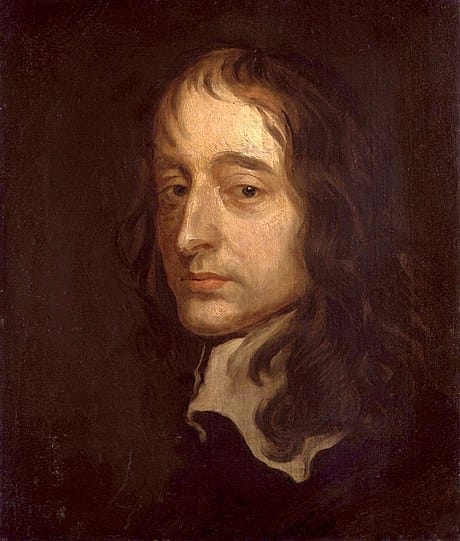
Little by little, Rabbi Rabinovitch came to understand that figures such as John Selden, Hugo Grotius, and John Locke were deeply influenced by Judaism and shaped their liberal outlook in its light.
Early liberal thinkers' reliance on Jewish sources led Rabbi Rabinovitch to see liberalism not as opposed to Judaism,
but as one of its branches.
What's more:
In his view, the development of liberal thought in the West distorted it, placing excessive emphasis on the values of liberty and equality while dropping fraternity and duty (in short, dropping republican values).
Interestingly, several decades after Rabbi Rabinovitch identified this point and shaped his Jewish-democratic outlook in its light;
another important scholar discovered it, entirely independently-
Prof. Fania Oz-Salzberger (with whom I had the privilege of studying Fania Oz-Salzberger), Amos Oz's daughter, wrote several important articles on the subject that resonate with and corroborate Rabbi Rabinovitch's position (again, entirely independently of him).
In this connection, I recommend her excellent book 'Jews and Words', a book my late mother gave me (-: and loved very much; these very same ideas are woven into it.
That's it.
And the relevant implications of viewing liberalism as a branch of Jewish thought and correcting its ultra-individualistic deviation through Jewish sources, with the teachings of Locke and his mentors as a bridge?
You be the judge.
Pictured: John Selden